Showing posts with label Scams and Losers. Show all posts

February 21, 2007

Better Universe Closed For Business...

Better Universe & MovieClubPlus, Inc.
Officially
Closed For Business

Better Universe and Movie Club Plus, Inc. have shut down "officially" as of February 16, 2007.

Apparently, the president of the company (Steve Gresham?) resigned without any warning or notice at all, thus, leaving behind a huge mess of unpaid commissions to the Better Universe members, as well as unpaid monies to its vendors.

What a friggin' shame. Here was a company who's trademark (which was not legally registered) was, "People Helping People Change the World." It was a company who's goal (supposedly!) was to donate much of its revenue to charity. Yeah, right.

Anyway, here's a copy of the message that was just recently sent out to the Better Universe membership. A Better Universe member forwarded it to me and I posted it on Scam.com.

February 3, 2007

BioPerformance Scam Fully Shut Down By Texas AG...

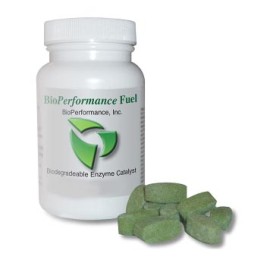
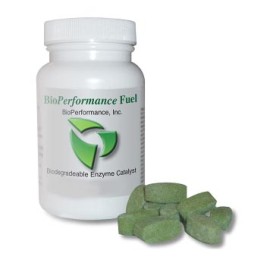
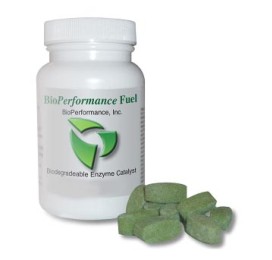
Texas State Attorney General Greg Abbott has successfully shut down BioPerformance, a Dallas-based pyramid scheme that illegally sold bogus fuel pills they "claimed" would increase automobile gas mileage by up to 30%.

Abbot's office announced a final judgment and a permanent injunction against BioPerformance for its illegal actions. The judgment prohibits BioPerformance from illegally marketing the so-called "top secret gas pill" in any way.

Abbot stated, "The legal action that we're announcing today shuts down this illegal operation and provides a restitution for countless consumers who were duped into purchasing this product.

The judgement provides $7.3 million in restitution, $150,000 in fines, and $400,000 in attorneys' fees. Also, the injunction prohibits BioPerformance from using an illegal pyramid scheme to market this product, or any other similar product, prohibits BioPerformance from falsely advertising and marketing this product, including making the bogus, outrageous claim that it would increase your gas mileage by up to 30%.

The judgement also prohibits BioPerformance from making claims that are not supported by scientific evidence that is supported by federal authorities."

Here's the history of my extensive coverage on the BioPerformance debacle.

January 20, 2007

What Is A Ponzi Scam?

As I mentioned in my previous post, I see a lot of questions online from people asking, "What is a pyramid scam?" But there are also plenty of people asking the question, "What is a Ponzi scam?"

So in the same spirit, here's some updated information explaining Ponzi scams, as well as some tips to help you avoid being scammed by one.

What is a Ponzi Scam?

A Ponzi scam (technically called a "Ponzi scheme") is essentially an investment fraud wherein the operator promises high financial returns or dividends that are not available through traditional investments. Instead of investing victims' funds, the operator pays "dividends" to initial investors using the principle amounts "invested" by subsequent investors.

The Ponzi scam generally falls apart when the operator flees with all of the proceeds, or when a sufficient number of new investors cannot be found in order to allow the continued payment of "dividends."

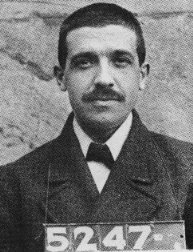
Charles Ponzi's Mug Shot

The Ponzi scheme is named after Charles Ponzi of Boston, Massachusetts. Charles Ponzi once operated an extremely attractive investment scheme in which he "guaranteed" his investors a 50% return on their investment in postal coupons.

Although he was actually able to pay his initial investors, his scheme ultimately dissolved when he was unable to pay the investors who entered the scheme later on.

Tips for Avoiding Ponzi Scams

  • As with all investments, exercise your due diligence in selecting investments and the people with whom you invest your money.
  • Make sure you fully understand the investment before you invest any of your money.

Related Blog Posts

What Is A Pyramid Scam?

I see a lot of questions online from people wondering what pyramid scams are and how they can avoid being taken by one.

So with that in mind, here's some updated information on pyramid scams, as well as some tips to help you avoid being scammed by one.

What is a Pyramid Scam?

A pyramid scam (technically called a "Pyramid scheme") is a non-sustainable business model that involves the exchange of money primarily for enrolling other people into the scheme - usually without any product or service being delivered.

Pyramid scams, which are also referred to as franchise fraud, or chain referral schemes, are marketing and investment frauds in which an individual is offered a distributorship or franchise to market a particular product.

The real profit is earned NOT by the sale of the product, but by the sale of NEW distributorships. Emphasis on selling distributorships or franchises, rather than the product or service, eventually leads to a point where the supply of potential investors is exhausted and the pyramid collapses, causing everyone to lose their money.

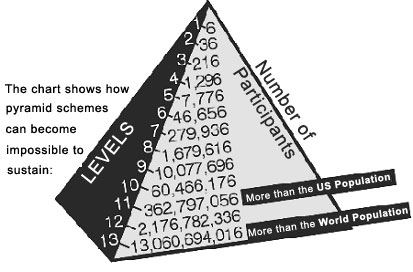
At the heart of each pyramid scam there's typically a representation that new participants can recoup their original investments by introducing two or more prospects to make the same investment. Unfortunately, promoters fail to tell prospective participants that this is mathematically impossible for everyone to achieve since some participants drop out, while others recoup their original investments, and then drop out.

Basic Pyramid Scam Criteria

Basically, under the law, a business opportunity or business model that meets the following criteria is an illegal pyramid scam:

  • You must make an investment to get the right to recruit.
  • When you recruit another person into the program, you receive what the law calls "consideration". That usually means money, but can be anything else of value.
  • Your new recruits must make an investment to get the right to recruit, and they also receive something of value for getting other people to join.

Note: Most Network Marketing and MLM (Multi-level Marketing) companies are NOT illegal pyramid scams. Though their actual structure, when diagrammed or drawn out, may have the "shape" of a pyramid, they are fully legitimate and legal businesses.

In fact, companies like Coca-Cola, Colgate, MCI, Microsoft, Toyota and Xerox, to name a few, now distribute some or all of their products and services by utilizing a Network Marketing business model.

Tips for Avoiding Pyramid Scams

  • Be wary of "business opportunities" to invest your money in franchises, distributorships or investments that require you to bring in subsequent investors to increase your profit or recoup your initial investment.
  • Independently verify the legitimacy of any company or business opportunity before you invest your money!
Related Blog Posts

October 31, 2006

Domain Registry of America Scam?

Important Home Business Today Consumer Alert:

Domain Name Scam

Here's a company you'll definitely want to watch out for...

It's called Domain Registry of America (DROA) and they send letters in the mail that "appear" to be real invoices for domain name renewals. But please don't fall for this scheme.

If you own a domain name, don't let DROA trick you into transferring it to them - you'll end up being quite ripped off on the renewal fee.

For example, they state on their website that "the industry standard price" for the registration of a domain name is, "$70.00 for a two year registration."

That's a grossly exaggerated and inaccurate figure. There are many better deals out there, my friends. One can easily buy a domain name for $7 or $8 bucks per year from several respectable domain registrars.

Unfortunately, and for several years now, countless people have fallen victim to the domain name renewal scam of Domain Registry of America (DROA). And over the course of time, I've discovered that even some of my own business associates have been preyed upon as well.

So what's the good news?

Well, thanks to the Federal Trade Commission, you definitely have a way to fight back - and more importantly, a way in which to get your money back!

How Does the Scam Work?

Domain Registry of America (droa.com) mails you a letter requesting that you renew your domain name (before it expires) by returning a payment (by check or by credit card) for the desired renewal term.

(NOTE: Never pay attention to snail mail regarding domain renewal notices. ALL renewals are automatically handled through your online domain account.)


The letter is meant to appear as an official renewal notice - however, it is not. It is actually a solicitation to register your domain name with DROA instead, and leave your current and trusted registrar.

When the transfer away from your current registrar occurs, your nameservers may also be changed. This means that your website may not be live on the Internet - of course DROA fails to inform you of this.

One of the other things Domain Registration of America (DROA) "conveniently" fails to tell you is that if you fall for their scam, and then realize afterward that you've fallen for it, and try to stop the transfer, that you'll still owe them $4.50. AND, you'll also owe them $4.50 IF the transfer fails (through no fault of your own), whether because of a registrar lock, or due to their own error!

By the way, DROA has also been accused of agreeing to credit consumers upon request, but NOT issuing those credits in a timely manner.

How Do I Fight Back?

If you receive one of these letters, file a complaint with the Federal Trade Commission - even if you've never made a payment to DROA. The notice will be reviewed and it will be judged to see if DROA is meeting the requirements of the FTC’s ruling.

How Do I Get My Money Back?

The Federal Trade Commission stipulated that, upon consumer request, DROA must refund any payment remitted to them, and compensate eligible consumers an additional $6.00 per domain name transfer to assist with fees incurred when transferring back to their original registrar.

Additional Redress

If you file a complaint with the FTC you may be entitled to ADDITIONAL redress if you experienced any loss of business or business expenses due to DROA’s scam.

To contact Domain Registry of America directly, call: (866) 434-0212 or Email: support@droa.com.

According to the ‘Truth In Lending Act’ (TILA) Domain Registry of America (DROA) MUST credit your credit card within seven (7) business days.

September 29, 2006

How To Avoid Pyramid Scams and Ponzi Scams...

Due to the recent news regarding Prosperity Automated System (a.k.a. PAS) and its possibly being shut down as a pyramid scheme, I've decided to post some information explaining what pyramid schemes and Ponzi schemes really are - and how to avoid being scammed by them.

How can you avoid being taken by a pyramid scam or a Ponzi scam? Here's what to know:

What is a Pyramid Scheme?

A pyramid scheme is a non-sustainable business model that involves the exchange of money primarily for enrolling other people into the scheme - usually without any product or service being delivered.

Pyramid schemes, which are also referred to as franchise fraud, or chain referral schemes, are marketing and investment frauds in which an individual is offered a distributorship or franchise to market a particular product.

The real profit is earned NOT by the sale of the product, but by the sale of NEW distributorships. Emphasis on selling distributorships or franchises, rather than the product or service, eventually leads to a point where the supply of potential investors is exhausted and the pyramid collapses, causing everyone to lose their money.

At the heart of each pyramid scheme there's typically a representation that new participants can recoup their original investments by introducing two or more prospects to make the same investment. Unfortunately, promoters fail to tell prospective participants that this is mathematically impossible for everyone to achieve since some participants drop out, while others recoup their original investments, and then drop out.

Basic Pyramid Scheme Criteria

Basically, under the law, a business opportunity or business model that meets the following criteria is an illegal pyramid scheme:

  • You must make an investment to get the right to recruit.
  • When you recruit another person into the program, you receive what the law calls "consideration". That usually means money, but can be anything else of value.
  • Your new recruits must make an investment to get the right to recruit, and they also receive something of value for getting other people to join.

Avoiding Pyramid Schemes

  • Be wary of "business opportunities" to invest your money in franchises, distributorships or investments that require you to bring in subsequent investors to increase your profit or recoup your initial investment.
  • Independently verify the legitimacy of any company or business opportunity before you invest your money!

What is a Ponzi Scheme?

A Ponzi scheme is essentially an investment fraud wherein the operator promises high financial returns or dividends that are not available through traditional investments. Instead of investing victims' funds, the operator pays "dividends" to initial investors using the principle amounts "invested" by subsequent investors.

The scheme generally falls apart when the operator flees with all of the proceeds, or when a sufficient number of new investors cannot be found to allow the continued payment of "dividends."

Charles Ponzi's Mug Shot

This type of scheme is named after Charles Ponzi of Boston, Massachusetts. Ponzi operated an extremely attractive investment scheme in which he guaranteed investors a 50 percent return on their investment in postal coupons. Although he was able to pay his initial investors, the scheme ultimately dissolved when he was unable to pay investors who entered the scheme later.

Avoiding Ponzi Schemes

  • As with all investments, exercise due diligence in selecting investments and the people with whom you invest.
  • Make sure you fully understand the investment before you invest your money.

July 22, 2006

Guaranteed Traffic, Guaranteed Hits: Do They Really Work?

Guaranteed Traffic and Guaranteed Hits
Do They Really Work?

This particular question came up on one of the home based business forums...

So here's some crucial information that you'll want to know about these so-called guaranteed traffic, guaranteed hits, guaranteed visitors and guaranteed signups programs before you spend any of your money on this type of advertising.

The Question:

"Has anyone had any success with the various websites out there that promise to redirect targeted traffic to your website? If so which ones? What sort of conversion rate do you get? One sign-up or product sold per 50, per 1,000, per 100,000, etc.?

Most of them seem to involve the use of pop-ups or pop-unders, which I would guess just annoy people. I know I ignore pop-ups and pop-unders.

Thanks"

The Answer:

"There are literally thousands of websites that offer these types of guaranteed hits, guaranteed visitors, and guaranteed traffic services.

As for their conversion rates or ROI (Return on Investment), I can say that I know many, many people who have tried them, but know of no one who's had any luck with them at all.

Why They Don't Work

The main reason guaranteed traffic, guaranteed hits and guaranteed visitor programs don't work is because the traffic generated is not "organic" traffic. Basically, the hits to your website are simply "generated" via pop-ups or pop-unders on some other site.

And that's where the problem begins.

People hate pop-ups and pop-unders. You even said yourself that you ignore them. ;)

Bottom line, they're a complete waste of your time and money. You'll pay for something like 10,000 or 50,000 hits/visitors, for example, and most likely not see a darn thing as a result of them!

If you want to generate quality, targeted traffic I'd suggest trying PPC (Pay-Per-Click) instead and using more reputable companies like Google or Yahoo!. Google's PPC program is called Google AdWords. Yahoo!'s is called Sponsored Search.

And if you don't yet have a blog that you post to regularly, be sure to start one as that can also be a good source of generating traffic for you, as well as an additional income source. Anyway, good luck with everything!

Aaron"

So, if you purchase guaranteed hits, guaranteed traffic, guaranteed visitors (the terms are entirely interchangeable) or guaranteed signups for your website or home business, I can pretty much GUARANTEE that the only thing you'll have is a much thinner wallet.

You'll be seeing Red instead of seeing Green. Grrr!

Guaranteed Traffic & Hits - What to Know

  • What are guaranteed hits?
  • What is guaranteed traffic?
  • What are guaranteed visitors?
  • What are guaranteed signups?

Guaranteed hits, guaranteed traffic, and guaranteed visitors are basically hits (visitors) to your website that are purchased. These "visitors" are generally directed to your site through the use of either pop-up ads or pop-under ads.

The companies offering these services have so-called "networks of websites" in which the webmasters have agreed to display pop-up and pop-under ads on their sites. When someone visits one of these sites, your website would open up as either a pop-up or a pop-under window.

The Problems

One of the first problems with this is that no one likes pop-up or pop-under ads. In fact, people hate them! This is why pretty much no one will buy anything from your site if they've come across it via pop-up or pop-under advertising schemes.

Another huge problem with these guaranteed traffic and guaranteed hits programs is that just about everyone online these days has some type of pop-up blocking software running on their computers that totally BLOCKS these pop-up and pop-under ads.

So what this means is that your site will be blocked from loading and opening fully before anyone even sees it! Talk about money down the drain! Oh, it'll count as one of your hits or visitors, but NO ONE will have actually SEEN your webpage or what you have to offer!

Another Ugly Problem

Beyond that, there's another very UGLY problem with the guaranteed hits, guaranteed traffic and guaranteed visitor programs. And it's something that the numbskulls selling them conveniently neglect to tell you...

They're selling you traffic. So they need to get the traffic from somewhere, right? Of course. So, many times they actually use their own website to gather the traffic. Other times, they just buy traffic from other companies and resell it to you!

And worse yet, they may even go as far as to use spam emails to generate your traffic. And when your name and website is used in a spam email or spam advertising campaign, your business could be shut down entirely. You could be charged for violating the law.

What are Guaranteed Signups?

Guaranteed signups are prospects who sign up for your program. They generally join for free. In other words, they're just leads... and poor quality leads at that. For the most part, they're "incentivised" to join. -So they won't make you any money, they'll only end up costing you money.

Guaranteed Signups Spell Danger

It's common for companies to promise you guaranteed signups. But instead, they deliver harvested email addresses and personal information. This basically means that you got a bunch of people who didn't really sign up for your business.

Translation: Possible spam complaints against you!

The bottom line is this... These such guaranteed traffic and guaranteed signups programs don't work! They'll only cause you to lose money... or much worse, your business and your reputation.

Generating Good Traffic and Leads

To generate leads, "quality" traffic and quality, targeted traffic to your website, be sure to use only reputable companies and time-proven advertising mediums and marketing practices.

Advertise by using Pay-Per-Click advertising, writing and submitting articles, blogging, being an active member in online business forums, and good old-fashioned person-to-person communication.

June 17, 2006

BioPerformance Scam Finally Dead...

BioPerFormance Finally Dead

Well, I guess it's safe to say that the BioPerformance home business scam is totally dead now. The company website hasn't been updated since May 26th, even though the company had promised to keep their distributors updated "daily" regarding the lawsuit with the Texas Attorney General.

Hmmm, the Attorney General won its injunction back on June 2nd... So why hasn't BioPerformance updated their "daily bulletin" since May? Probably because, well, they're crooks!

BioPerformance Lawsuit History:

June 3, 2006

FFI Investigated by Florida Attorney General...

More bad news for the gas additives industry. First BioPerformance, and now Fuel Freedom International (FFI). Yep, FFI is now being investigated by Florida Attorney General, Charlie Crist.

Florida AG's Office:

"Allegation or issue being investigated:

Unfair/deceptive business practices in the sale of product that purports to make gasoline burn with greater efficiency without independent scientific testing to substantiate claim. Further, product is sold/distributed by means of multi-level marketing whereby the compensation is not based primarily on volume of bona fide sales. Possible violations of Florida Unfair or Deceptive Trade Practices Act, F.S. 501.201. et. seq., production and/or soliciting on behalf of a chain letter or pyramid club (F.S. 849.091).

Status of case:
Investigation opened

Subject's position:
No response at this time

AG unit handling case:
Economic Crimes Division in Orlando, Florida"

FFI's contact info:

Fuel Freedom International, LLC.
650 Douglas Avenue, Suite 1040
Altamonte Springs, FL 32714

Phone: (407) 682-0060
Email: support@myffi.biz

David Matichak is the President of Fuel Freedom International (FFI).

FFI in the News:

May 15, 2006: FFI gas Pills - Consumer Alert

BioPerformance Scam Loses In Court...

BioPerformance Scam
-A Tough Pill to Swallow-

The courtroom testimonies of BioPerformance President, Lowell Mims and Vice President, Gustavo Romero, revealed that they each pocketed millions of dollars from corporate accounts and bought lavish gifts through an illegal scheme.

On Thursday, the Texas Attorney General's office won an injunction against BioPerformance, Inc. The injunction prevents the company from marketing its BioPerformance Fuel pills.

It also freezes the assets of Lowell Mims and Gustavo Romero, which total over $7,000,000. Not surprisingly, neither Mims nor Romero could be reached for comment.

A spokesman for Attorney General Greg Abbott stated that the ruling paves the way for a civil trial to proceed against the company.


"Attorney General Abbott Prevails In Ongoing Effort To Halt The Sale Of Bogus BioPerformance Fuel Pill

SAN ANTONIO- Attorney General Greg Abbott hailed a state district court’s decision today upholding his injunction against Dallas-based BioPerformance and its owners Lowell Mims and Gustavo Gus Romero.

The temporary injunction issued today by the court continues to bar the defendants from accessing millions of dollars wrongly diverted for personal uses from this illegal pyramid. These funds were frozen when Attorney General Abbott sued BioPerformance on May 16. The court order states the fuel pill marketed and sold by BioPerformance does not increase fuel economy, nor does it reduce harmful emissions. It also orders BioPerformance to cease marketing the fuel pill as a product that improves gas mileage..."

Admitted Under Oath:

"...During the three-day hearing in San Antonio, both defendant's admitted under oath that since the company’s inception in December 2005 they each took millions of dollars from the BioPerformance corporate accounts and deposited them into their personal accounts.

These dividends included the creation of trust funds of $2.7 million by Mims and $2.4 million by Romero, each for personal use by the defendants’ families. Both Mims and Romero admitted they personally diverted at least $7.4 million in money from the sale of the bogus fuel efficiency pills.

Mims stated that he made several lavish purchases with the dividends he deposited into his account, including $90,000 for a Humvee vehicle, $60,000 for matching Rolex watches for himself and his wife, and a $160,000 payoff of his home mortgage.

Defendant Romero admitted that his purchases with BioPerformance money included about $40,000 for a BMW, $15,000 for a ring for his wife, and a $50,000 down payment for a swimming pool for his home.

The evidence presented by the Office of the Attorney General also showed that Romero wired hundreds of thousands of dollars to his brother in Mexico, the purported broker that supplied BioPerformance with its raw materials -- powdered naphthalene. Romero said in court that it cost the company about $4 to manufacture each 40 pill bottle, which on its Web site BioPerformance suggested should retail for approximately $50, a markup in excess of 1,000 percent...."

Temporary Injunction:

You can read the actual injunction (PDF file) here. It truly reveals some really disturbing facts.

BioPerformance Thus Far:

June 2, 2006

BioPerformance Lawsuit Court Updates...

In court on Wednesday, the State of Texas suggested that Lowell Mims, President of BioPerformance, has made approximately $5 Million since the launch of the BioPerformance company.

Mims himself admitted that he's made enough money from BioPerformance to fully pay off his house, buy a brand new Hummer for $90,000, and a pair of Rolex watches... one for himself and one for his wife, for $60,000.

BioPerformance Vice President Gus Romero also took the stand and admitted that he had violated the court's order to freeze all of the company's assets. He admitted to transferring $300,000 to pay his attorney!

It was also revealed in court that both Lowell Mims and Gus Romero have trust funds worth $2.7 Million.

Mims also continued to sing praises of the BioPerformance little green pill, occasionally getting in trouble with the judge for speaking out of turn.

It's important to point out that sometimes Mims would say that the pill works, but then he would mention the company's disclaimer that it did not guarantee any results.

Full story from WESH.com.

BioPerformance Thus Far:

May 27, 2006

BioPerformance Investigated by Florida Attorney General...

BioPerformance Investigated Yet Again
Florida Attorney General Joins In

Wow, looks like more bad news for BioPerformance, Inc. Now the Attorney General of Florida, Charlie Crist, is investigating as well.

And BioPerformance doesn't even know it yet! Just read the "Subject's position" section below. They're still unaware that the Florida Attorney General has stepped in as well.

You heard it here first!

From the Office of the Attorney General of Florida:

Case Number: L06-3-1083

Subject of investigation:
Bio Performance, Inc. and Lowell Mims, Director

Subject's address:
1300 W. Walnut Hill Ln, Irving, TX 75038

Subject's business:
Multilevel marketing

Allegation or issue being investigated:
Unfair/deceptive business practices in the sale of product that purports to make gasoline burn with greater efficiency without independent scientific testing to substantiate claim. Further, product is sold/distrbuted by means of multi-level marketing whereby the compensation is not based primarily on volume of bona fide sales. Possible violations of Florida Unfair or Deceptive Trade Practices Act, F.S. 501.201, et. seq., production and/or dissemination of misleading advertisements (F.S. 817.40 & 817.41), and operating, participating in, or soliciting on behalf of a chain letter or pyramid club (F.S. 849.091).

Status of case:
Investigation opened

Subject's position:
Unaware of investigation.

AG unit handling case:
Economic Crimes Division in Orlando, Florida

Direct link: Florida Attorney General's Office

More on BioPerformance:

May 26, 2006

Liberty League Scam Hit and Exposed...

Liberty League Hit and Exposed
Arizona Attorney General Hits Hard

The BAD news: The 2-up Liberty League has now been exposed via a strong hit by Arizona Attorney General, Terry Goddard.

The GOOD news: There is a chance for those who've lost money in Liberty League to get all of it back. And if not all of fit, then most of it. That's definitely some good news.

But do keep your fingers crossed as I'm sure the, "I WANT MY MONEY BACK!" line might be a bit lengthy, to say the least.

For example, here's an idea of some of the most recent complaints Rod Cook, the MLMWatchDog, has received:

He's had a complaint from a gentleman who was taken for $63,000, a complaint from a blind couple that was encouraged to mortgage their house for $40,000, and a complaint from a single Mom who was taken for $23,000.

Attorney General's News Release:

Office of Attorney General Terry Goddard

Terry Goddard Settles with Personal Development Marketing Company

(Phoenix, Ariz. – May 24, 2006) Attorney General Terry Goddard today announced a settlement with Liberty League International, LLC, and its principals, Brent Payne and Shane Krider. The consent judgment resolves complaints that the multi-level marketing corporation tricked customers into spending substantial amounts of money by promising “sizable commissions” if they helped market three “personal development” products and recruit new participants into the program.

The settlement requires Liberty League International, based in Scottsdale, to pay $115,000 which will be used to pay for consumer education, attorneys' fees and investigation costs, and victim restitution to be determined by the court at a later date.

According to documents filed in Maricopa County Superior Court, Payne and Krider said customers had the potential to earn large sums of money if they used and recruited new participants to use Liberty League’s “personal development” products. In fact, the majority of participants did not earn enough to cover the amount they paid to buy the products sold to them.

The personal development products included a home-study course, a four-day personal development conference and a five-day personal finance and development conference. Prices ranged from $1,495 to $12,995 per person.

In addition to the civil penalties, attorney’s fees and restitution, the defendants are also required to:

  • Refrain from making unsubstantiated income claims.
  • Advise potential customers of the correct percentage of participants who have made a profit through their participation in the Liberty League program.
  • Refrain from making any false or deceptive statements in their marketing materials."

Assistant Attorney General Nancy V. Anger handled this case.

Victim of Fraud?

If you believe you've been a victim of fraud, contact the Attorney General's office in Phoenix at: 602-542-5763; in Tuscon at: 520-628-6504; or outside the metro areas at: 1-800-352-8431.

To file a consumer fraud complaint online with the Arizona Attorney General, go here.

To file a complaint in person, the Attorney General's office has 22 satellite offices throughout the state with volunteers available to help. Locations and hours of operations are posted on the Attorney General's website at: www.azag.gov.

Consumers are also encouraged to sign up on the website to receive consumer advisories from the Attorney General.

May 24, 2006

BioPerformance Lawsuit Explained...

BioPerformance Shut Down By Feds
BioPerformance Lawsuit Explained

As many people now know, BioPerformance, Inc. was ordered to shut down its operations. Its assets were frozen, pending resolution of the lawsuit filed by Texas Attorney General Greg Abbott.

But what's it all about? Here's great explanation of all of the issues...

Marketers of Gas Additive Shut Down

By JOHN MORITZ
STAR-TELEGRAM AUSTIN BUREAU

"Abbott, who filed his lawsuit in Bexar County because BioPerformance had held sales seminars in San Antonio, hired a University of Texas at Austin mechanical engineering professor to test the product claims. Abbott said numerous complaints about BioPerformance had come to the attention of his office. The professor, Ronald Matthews, said in an interview that as soon as he analyzed the chemical makeup of the product, it was clear that any claims of improved fuel efficiency or lower emissions were false.

"The findings were pretty straightforward," Matthews said. "The main chemical was naphthalene, and it does nothing for fuel economy."

According to BioPerformance's Web site, the additive is nontoxic. However, the Environmental Protection Agency says exposure to naphthalene can result in serious health problems.

Short-term exposure, which includes inhalation, ingestion and skin contact, can cause anemia, liver damage and neurological damage, according to the EPA. Long-term exposure has been reported to cause cataracts and retina damage."

"BioPerformance's Web site remained active Wednesday afternoon despite an order by state District Judge Andy Mireles that all of the company's business activities be shut down."

"Abbott said that if the owners are found to have violated state deceptive-trade laws, they would face fines of up to $20,000 for each violation.

And he urged consumers to be skeptical of any money-saving venture that sounds too good to be true."

More on BioPerformance:

May 17, 2006

BioPerformance Scam Shut Down! Attorney General...

BioPerformance, Inc. Shut Down!
Attorney General Freezes Assets...

In an earlier post, "BioPerformance Scam Revealed?" I wrote about a recent TV expose on the BioPerformance company and the BioPerformance gas pills.

Well, now the Feds are involved. And the Texas State Attorney General has shut down BioPerformance. He's also filed a lawsuit against them, obtained a temporary restraining order and frozen all the assets of BioPerformance, Inc.

Hmmm, can't say that I'm the least bit surprised!

The lawsuit alleges, "violations of the Texas Deceptive Trade Practices Act and the promotion of an illegal pyramid scheme, which can result in penalties of $20,000 per violation."

VIDEO: Greg Abbott Speaks About BioPerformance Scam

From Texas Attorney General, Greg Abbott's News Release:

"Abbott Shuts Down Dallas-based Bioperformance For Peddling Fake Fuel Pills In Pyramid Scheme..."

"AUSTIN - Texas Attorney General Greg Abbott today filed a lawsuit and obtained a temporary restraining order and asset freeze against Texas-based BioPerformance Inc. The company, organized as an illegal pyramid scheme, markets a fuel pill it falsely claims will boost gas mileage and save consumers money.

BioPerformance Inc., president and owner Lowell Mims and co-owner Gustavo Romero of Irving advertise nationally via the Internet and through seminars around Texas and other states, exploiting the climate of today’s high fuel prices. The company’s ads claim the gasoline pills and powders they offer have a non-toxic “top secret gas pill” that can increase fuel efficiency by 30 percent or more and cut harmful emissions by up to 50 percent. In fact, the additive is basically the chemical equivalent of mothballs, which are toxic.

"BioPerformance claims its top-secret gas pills can save consumers big bucks at the gas pump," said Attorney General Abbott. “These claims are bogus; the pill does absolutely nothing to improve gas mileage. The company is merely a smokescreen to trigger the recruitment of more and more paying members into what appears to be an illegal pyramid scheme.”

Scientists who tested the product at the University of Texas at Austin and at a Florida university concluded that the pills are mainly naphthalene, the chemical found in mothballs. The Attorney General’s laboratory expert actually concluded BioPerformance’s product could decrease engine performance..."

Consumer Complaint Form - Fill this out if you've been scammed!

More on BioPerformance:

May 15, 2006

FFI Gas Pills - Consumer Alert...

From MLMWatchDog...

FFI Gas Pills Pounded

"11 May 2006 – It seems the Media hates gas pills right or wrong. FFI and their gasoline pills just went through the media thresher like BP Below did. It seems that the Media and the law just have it in for gas savings... That is because this is probably the 3 wave of "save gas" stuff to roll through the U.S. in the last 30 years!"

VIDEO: TV Expose of FFI Gas Pills

May 11, 2006

BioPerformance Scam Revealed? - Little Green Pill Mothballs?

BioPerformance Revealed
Little Green Pill FLUNKS TV Test!

After watching the news story (see video link below), are these BioPerformance gas pills similar to the "Green Beas" that hit as an MLM scam way back in 1989?

The BioPerformance gas pills, according to the news story, are little more than napthalene - dyed green and made into pill shape. Their lab test showed the chemical makeup to be virtually 100% Napthalene, which is what mothballs were made of decades ago.

And what's possibly worse, they pointed out that BioPerformance states (right on the bottle) that the little green pill is Non Toxic. BUT Napthalene IS TOXIC! In fact, it's not only is it poisonous, it also has links to cancer!

VIDEO: TV Expose of BioPerformance

These days, there are tons of gas business opportunities popping up in every which way, shape and form. But the fact is, they don't seem to work once put to the real test.

And now BioPerformance, also know as the "Little Green Pill" has entered MLM as one of the more well-known of the recent gas pill business opportunities. Well...

Below is the investigative report by an Orlando area TV news crew that recently exposed BioPerformance and the little green pill. According to them, "the little green pill was a bust."

Here's the story:

Pain At The Pump: The Little Green Pill

ORLANDO, Fla. - POSTED: 3:43 pm EDT May 4, 2006

"At a recent BioPerformance pep rally in Orlando, the WESH 2 I- News Team went undercover. WESH 2 I-Team reporter Michelle Meredith asked BioPerformance president Lowell Mims, a pastor out of Dallas, and a multilevel marketing veteran, if she could ask some questions about the product.

"You have to get a disclosure form", he said.

"For hours, we've been hearing you have nothing to hide. So, why can't you talk to me right now?" she said.

"We have to legally make sure everything is covered so you all won't hurt our company," Mims said. In fact, Mims couldn't get away from her fast enough.

Why are they running? Maybe the answer is printed on the bottle. In tiny print is a bizarre disclaimer. "BioPerformance, Inc., doesn't guarantee anyone any results," it says.

Little Green Pill Put To
Test

So to get to the bottom of the little green pill, we enlisted the help of two experts at the University of Central Florida. Dr. Kevin Belfield, the head of chemistry department, was brought on board to find out what's in the pill.

And to find out if the little green pill works, we recruited Dr. Bob Hoekstra. His lab at UCF tests race car engines.

Hoekstra's plan was very straightforward. We took our car to a shop called KDK Performance and strapped our minivan to what's essentially a treadmill for cars.

Hoekstra put in a very measured amount of plain old regular unleaded gas, and then ran the engine at approximately 70 mph. We did this over and over again until we got a baseline. The minivan runs out of gas after about 10 minutes.

To prove BioPerformance's claim, the little green pill needs to run that motor 25 percent longer.

"We should go about 12 ½ minutes," Hoekstra said.

But there's a catch. Before we can test the little green pill, first, we have to feed our minivan a bunch of pills, according to the directions you get online. You are supposed to give your car a "boostershot" -- feed your gas tank double the number of pills normally needed.

So before we see any results, we need to burn four tanks of gas.

While we're burning those miles, Dr. Belfield and his UCF students made an interesting discovery...

Full story on WESH 2 News:

Additional Links:
RIP-OFF Report.com - See what consumers are saying.
Consumer Complaint Form - Fill this out if you think you've been scammed!

Related terms: Bio Performance, BioPerformance Gas Pills, BioPerformance Scam, Green Pills, Gas Pills, BioPerformance Fuel Additive, Fuel Additive

March 27, 2006

12daily Pro Shut Down: Scam Update!

12daily Pro Scam Update...

Yes, it is official. As I had mentioned in an earlier post, 12daily Pro (12dailypro.com) has been shut down permanently, and the founder of the company, Charis Johnson of Charlotte, N.C., is being charged by the SEC (Securities and Exchange Commission) for fraud.

Both she and her companies, 12daily Pro and LifeClicks, LLC. ("LifeClicks") have ceased any and all solicitation of investors. Further, she agreed to a complete freeze of all assets as well as to the appointment of a receiver (Thomas F. Lennon) who will take control of the companies' operations.

StormPay, which 12daily Pro had used as its payment processor, is still operating of course... but as I understand it, they may still be having a few problems due to the recent overload of website traffic that occurred as a result of the news spreading like wildfire across the Internet.

The Scam's Effects:

So far the 12daily Pro scam has cost hundreds of thousands of people thousands and thousands of dollars. In Utah alone, the number of Utahns that were bilked by the 12daily Pro Internet scam has exceeded 8,400.

For example, Derek Dodge, a mortgage broker from Salt Lake City, said that he and a partner of his had lost $2,300 in 12daily Pro. He added, "We were leery of this for a long time because Utah has always been notorious for scams. And then we finally got in, but apparently at the wrong time to make money."

The Ponzi Scheme:

The SEC has described 12daily Pro as a Ponzi or "Pyramid" scheme, in which early investors receive high returns for their money from the money conned from subsequent investors, rather than from real business revenue.

Regarding 12daily Pro, Utah Consumer Protection Director Francine Giani had this to say: "A pyramid scheme just offers memberships, no products or service, just money." People who got money at the beginning (of 12daily Pro) are fat and happy, but a lot of the people underneath never got their money back."

Prosecutors said that 12daily Pro (12dailypro.com) had promised that in exchange for buying $6 units, up to a maximum of $6,000 worth, investors could expect a return of 144% within 12 days simply for using an application to automatically click on, or autosurf, a dozen Internet advertisements daily.

The SEC complaint filed in the U.S. District Court of Los Angeles alleges Johnson ran a $50 million scam that involved more than 300,000 investors, pulling in close to $2 million for herself.

The SEC stated that Johnson (without actually admitting guilt) had agreed to a tentative settlement in which she promised to stop recruiting any new members. The deal also freezes her assets and requires the government to appoint a receiver who will monitor Johnson's companies and distribute whatever refunds are eventually approved.

How and When it Happened...

In late January, 12daily Pro began to collapse after StormPay decided to halt processing payments for the 12dailypro.com website. StormPay, which is currently under investigation by Tennessee authorities, said it took the action after learning that 12daily Pro had come under suspicion as an illegal scam.

Then in late February things really began to unravel as the U.S. Securities and Exchange Commission stepped in and filed fraud charges. The Commission alleges:

That the defendants defrauded investors by operating 12daily Pro as a Ponzi scheme — using new investor monies to pay the promised returns to existing investors — in violation of federal laws.

The defendants falsely represented that upgraded members’ earnings “are financed not only by incoming member fees, but also with multiple income streams including advertising, and off-site investments.”

In fact, at least 95% of 12daily Pro’s revenues have come from new investments in the form of membership fees from new or existing members. The other “multiple income streams” from advertising revenues or off-site investments touted by the defendants were either negligible or non-existent.

In addition, undisclosed to investors, Johnson transferred more than $1.9 million in investor funds to her personal bank account since mid-2005. StormPay's assets are also apparently targeted by the SEC.

How Can You Avoid Being Taken by a Scam?

Here's what to know...

-From the Federal Bureau of Investigation - Common Fraud Schemes...

What is a Ponzi Scheme?

What's a Ponzi scheme exactly? A Ponzi scheme is essentially an investment fraud wherein the operator promises high financial returns or dividends that are not available through traditional investments. Instead of investing victims' funds, the operator pays "dividends" to initial investors using the principle amounts "invested" by subsequent investors.

The scheme generally falls apart when the operator flees with all of the proceeds, or when a sufficient number of new investors cannot be found to allow the continued payment of "dividends."

This type of scheme is named after Charles Ponzi of Boston, Massachusetts, who operated an extremely attractive investment scheme in which he guaranteed investors a 50 percent return on their investment in postal coupons. Although he was able to pay his initial investors, the scheme dissolved when he was unable to pay investors who entered the scheme later.

Important Tips to Avoid Ponzi Schemes:

  • As with all investments, exercise due diligence in selecting investments and the people with whom you invest.
  • Make sure you fully understand the investment BEFORE you invest your money!

What is a Pyramid Scheme?

What's a pyramid scheme exactly? A pyramid scheme is a non-sustainable business model that involves the exchange of money primarily for enrolling other people into the scheme, usually without any product or service being delivered. Pyramid schemes, also referred to as franchise fraud, or chain referral schemes, are marketing and investment frauds in which an individual is offered a distributorship or franchise to market a particular product.

The real profit is earned, NOT by the sale of the product, but by the sale of NEW distributorships. Emphasis on selling franchises rather than the product eventually leads to a point where the supply of potential investors is exhausted and the pyramid collapses, causing everyone to lose all of their money.

At the heart of each pyramid scheme there's typically a representation that new participants can recoup their original investments by inducing two or more prospects to make the same investment. Unfortunately, promoters fail to tell prospective participants that this is mathematically impossible for everyone to do, since some participants drop out, while others recoup their original investments and then drop out.

Important Tips to Avoid Pyramid Schemes:

  • Be wary of "opportunities" to invest your money in franchises or investments that require you to bring in subsequent investors to increase your profit or recoup your initial investment.
  • Independently verify the legitimacy of any franchise or investment before you invest!


The SEC's Official Litigation Release...

U.S. SECURITIES AND EXCHANGE COMMISSION

Litigation Release No. 19579 / February 27, 2006

SECURITIES AND EXCHANGE COMMISSION v. CHARIS JOHNSON, LIFECLICKS, LLC, and 12DAILY PRO, Civil Action No. CV 06-01018 NM (PLAx) (C.D. Cal.)

SEC HALTS “PAID AUTOSURF” INTERNET PONZI SCHEME THAT RAISED OVER $50 MILLION FROM 300,000 INVESTORS WORLDWIDE

The Securities and Exchange Commission (“Commission”) today announced the filing of securities fraud charges against the operators of www.12dailypro.com, a “paid autosurf program” that in fact was a massive Ponzi scheme which raised more than $50 million from over 300,000 investors worldwide by offering a 44% return on investment in just 12 days. As a result of the Commission’s charges, the defendants, Charis Johnson, age 33, of Charlotte, N.C., and her companies, 12daily Pro and LifeClicks, LLC (“LifeClicks”), ceased their solicitation of investors and agreed to a freeze of all their assets and the appointment of a receiver who will take control of the companies’ operations.

According to the Commission’s complaint, which was filed last week in federal district court in Los Angeles, California, www.12dailypro.com claimed to be a paid autosurf program — a form of online advertising program that purportedly generates advertising revenue by automatically rotating advertised websites into a viewer’s Internet browser. Advertisers purportedly pay “hosts,” which in turn pay their members to view the rotated websites. The Commission’s complaint alleges that 12daily Pro’s sale of membership units constituted the fraudulent and unregistered sale of securities under the federal securities laws.

According to the Commission’s complaint, the 12daily Pro website, recently ranked as the 352nd most heavily trafficked website, solicited investors to become “upgraded members” by buying “units” for a “fee” of $6 per unit, with a maximum of 1,000 units. 12daily Pro promised to pay each upgraded member 12% of his or her membership fee per day for 12 days. At the end of 12 days, the member purportedly would have earned a total of 144% of his or her original membership fee, 44% of which would be profit on the membership fee. To receive the promised payment, a member purportedly must view at least 12 web pages per day during the 12 day period. The amount of returns that 12daily Pro would pay its members, however, was in fact dependent solely on the amount of each member’s investment, not on the amount of website-viewing or any other services rendered.

The Commission alleges that the defendants defrauded investors by operating 12daily Pro as almost a pure Ponzi scheme — using new investor monies to pay the promised returns to existing investors — in violation of the federal securities laws. The defendants falsely represented that upgraded members’ earnings “are financed not only [by] incoming member fees, but also with multiple income streams including advertising, and off-site investments.” In fact, at least 95% of 12daily Pro’s revenues have come from new investments in the form of membership fees from new or existing members. The other “multiple income streams” from advertising revenues or off-site investments touted by the defendants were either negligible or non-existent. In addition, undisclosed to investors, Johnson transferred more than $1.9 million in investor funds to her personal bank account since mid-2005.

Johnson and her companies have consented to the entry of a court order that permanently enjoins them from future violations of the antifraud provisions of the federal securities laws, imposes a freeze on their assets, prohibits the destruction of documents, and appoints Thomas F. Lennon as permanent receiver over the assets of 12daily Pro and LifeClicks, LLC. The order is subject to approval by United States District Judge Nora M. Manella. Johnson and her companies consented to the order without admitting or denying the allegations in the complaint. The Commission’s complaint also seeks repayment of ill-gotten gains and civil money penalties; the amounts to be sought will be determined at a later date.

The Commission’s complaint alleges that the defendants violated the antifraud provisions of Section 17(a) of the Securities Act of 1933 and Section 10(b) of the Securities Exchange Act of 1934 and Rule 10b-5 thereunder, and the securities registration provisions of Sections 5(a) and 5(c) of the Securities Act.

This matter was referred to the Commission in early February by several members of the public. Complaints and tips from the public are vital to the Commission’s mission to protect investors, and the Commission staff reviews each and every complaint it receives.

March 23, 2006

Guaranteed Hits, Guaranteed Visitors... Do They Really Work???

Guaranteed Hits, Guaranteed Visitors...
Do They Really Work???

This particular question came up recently on one of the home based business forums...

So here's some crucial information that you'll want to know about these so-called guaranteed traffic/guaranteed hits/guaranteed visitors programs before you spend any of your money on this type of advertising...

The Question:

"Has anyone had any success with the various websites out there that promise to redirect targeted traffic to your website? If so which ones? What sort of conversion rate do you get? One sign-up or product sold per 50, per 1,000, per 100,000, etc.?

Most of them seem to involve the use of pop-ups or pop-unders, which I would guess just annoy people. I know I ignore pop-ups and pop-unders.

Thanks"

The Answer:

"There are literally thousands of websites that offer these types of guaranteed hits/guaranteed traffic type of services. As for their conversion rates or ROI (return on investment)... I can say that I know many, many people who have tried them, but know of no one who's had any such luck with them at all.

The main reason they don't work is because the traffic is not organic traffic. The hits to your site are simply generated via pop-ups or pop-unders on some other site... And therein lies the problem. People hate pop-ups and pop-unders. You even said yourself that you ignore them. ;)

Bottom line, I think they're a complete waste of time and money. You'll pay for something like 10,000 or 50,000 hits/visitors, for example, and most likely not see a darn thing as a result of them!

If you want to generate quality, targeted traffic I'd suggest trying PPC (pay-per-click) instead and using more reputable companies like Google or Yahoo!. Google's PPC program is called Google AdWords, and Yahoo!'s is called Sponsored Search.

And if you don't yet have a blog that you post to regularly, be sure to start one as that can also be a good source of traffic for you, as well as an additional income source. Anyway, good luck with everything!

Aaron"

So there you have it. If you purchase guaranteed hits/guaranteed traffic/guaranteed visitors (the terms are entirely interchangeable) for your website, I can pretty much guarantee that the only outcome you'll see is a much thinner wallet.

Instead of seeing green, you'll only be seeing red. :(

What to Know About Guaranteed Traffic:

  • What are guaranteed hits?
  • What is guaranteed traffic?
  • What are guaranteed visitors?

Guaranteed hits, guaranteed traffic, and guaranteed visitors are basically hits (visitors) to your site that you can purchase. These "visitors" are directed to your website through the use of either pop-up ads or pop-under ads.

The companies offering these services have so-called "networks of websites" in which the webmasters have agreed to display pop-ups and pop-unders on their sites. When someone visits one of these sites, your website would open up as either a pop-up or a pop-under window.

But there are many problems with this...

First of all, and as you probably already know, no one likes pop-up ads or pop-under ads. In fact, people hate and despise them! And because of this you can be sure that they WILL NOT buy anything from your site if they've come across it in this manner.

Another huge problem with these guaranteed traffic/guaranteed hits programs is that just about everyone online these days has some sort of pop-up blocking software running on their computers that totally blocks these pop-up and pop-under ads.

This of course means that your site will be blocked from fully loading or opening before anyone even sees it! Talk about money down the drain! Oh, it'll count as one of your purchased visitors, but no one will have actually seen your website or what you have to offer!

Beyond that, there's yet another ugly problem with these guaranteed hits programs... something that those who are selling them conveniently neglect to tell you...

They're selling you traffic, so they need to get the traffic from somewhere else, right? Of course. So, many times they actually use their own website to gather the traffic. And other times, they just buy traffic from other companies and resell it to you!

And worse, they may even go as far as to use unsolicited emails (spam) to generate traffic. And when your name and website is used in a spam email or spam advertising campaign, your business could be shut down entirely and you could be charged for violating the law.

Definitely ugly, and definitely not good!

So bottom line... guaranteed traffic programs do not work! They'll only cause you to lose your money, or much worse, your business and your reputation.

Generating Good Traffic and Leads

To generate leads, "quality" traffic and quality, targeted traffic to your website, be sure to stick with reputable companies and time-proven advertising mediums and marketing practices.

Try things like PPC (pay-per-click) advertising, writing and submitting articles, blogging, being an active member in online business forums, and good old fashioned person-to-person communication.

Happy Marketing!

March 1, 2006

12DailyPro Scam Finally Dead!


Well, I warned people. Others warned people. Even Rod Cook of MLMWatchDog.com made it a point to warn people that 12DailyPro was nothing but a no-good Ponzi (Pyramid) scheme.

And finally, 12DailyPro is dead!

Apparently, after being alerted to possible fraud at 12dailyPro, Stormpay, the main payment processor 12DailyPro used, has frozen the accounts and its owner has said that the money presently in the accounts will NOT cover the requests for refunds.

The 12DailyPro Investigation:

On February 13th, The Wall Street Journal Online announced that the SEC and FBI had began an investigation of 12DailyPro. Those familiar with the investigation stated that the 12DailyPro is under investigation by both the FBI and the Securities and Exchange Commission, and at least two U.S. states.

In recent days, and amid those probes, the main payment processor for 12dailyPro, Stormpay, Inc., has frozen the funds that were initially supposed to be paid out to members.

One law-enforcement official involved in the probe said a "significant number of people" likely lost millions of dollars in the aggregate. The site recently claimed it had 300,000 members from around the world, some putting in $6,000 at a time.

-The FBI officially announces its investigation!

For even more on it, check out what the MLMWatchDog had to say...

12 DAILY PRO A PAID TO SURF PONZI
4 Feb 2006 -- At a quick glance 12DP, is a Ponzi Scheme... Product of absolutely no value (12 "surfing" click thrus a week) and they pay out enormous returns (over 40% in 12 days). No commissions = Ponzi! Ed. Note: Sucking in many, many suckers and more suckers!
abc 4 News Video on 12daily Pro scam

PYRAMID SCAM - 12 DAILY PRO - SURF SCAM DEAD
LOOK OUT FOR IMITATORS!

11 Feb 2006 -- 12daily Pro scam promised to pay large sums back on each investment to users who visit 12 participating websites a day. This is a “SURF” pyramid scheme... of the highest order as we reported. Now getting serious attention from regulators! Great - BUT LOOK OUT! - THERE ARE IMITATORS, SAME GAME!
STORY:

http://www.wtoctv.com/Global/story.asp?S=4476868

Georgia Governor's Office of Comsumer Affairs

12daily Pro Scam Update!!!